
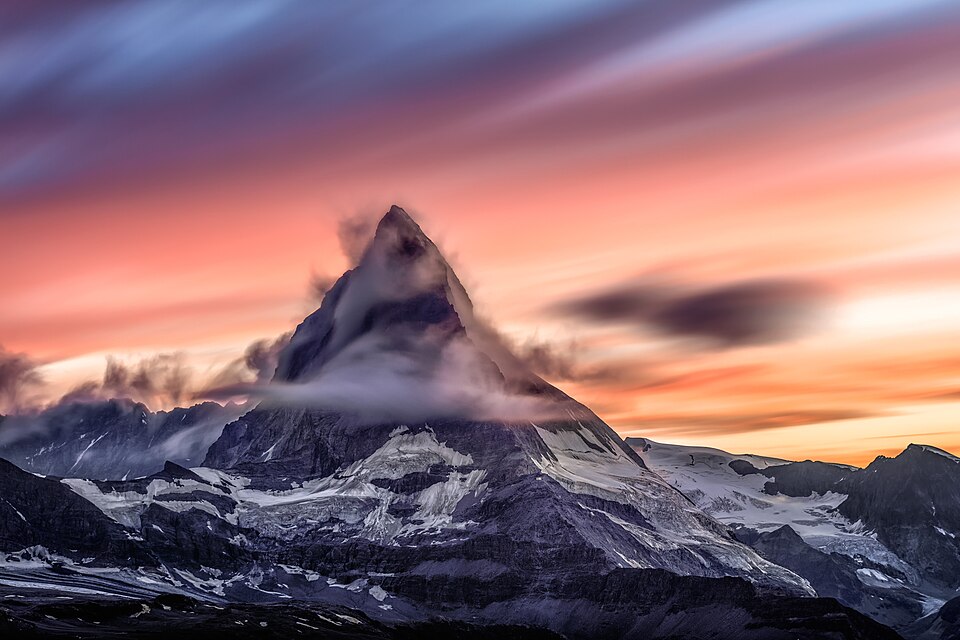
Search for a Switzerland itinerary and you will find plenty of plans that try to fit Zurich, Lucerne, Bern, Geneva, Zermatt, and several other stops into a single week.
This article is written by Swiss Private Journey, a private tour service in Switzerland operated by TURI TRAVEL. Our guide, Turi, has lived in Switzerland for 15 years and has guided guests on private tours across the country. Turi’s honest view: a rushed itinerary that tries to fit everything in is not recommended. The travelers who leave happiest are almost always the ones who choose fewer places and experience them properly.
This guide gives you two realistic routes based on places Turi regularly shows guests: a classic five-night, seven-day trip and a focused three-night, four-day trip. It walks you through each day, explains how to choose between trains and a private vehicle, shows how the route changes by season, and gives you a practical cost estimate.
Table of Contents
The Best Switzerland Itinerary Uses Fewer Bases
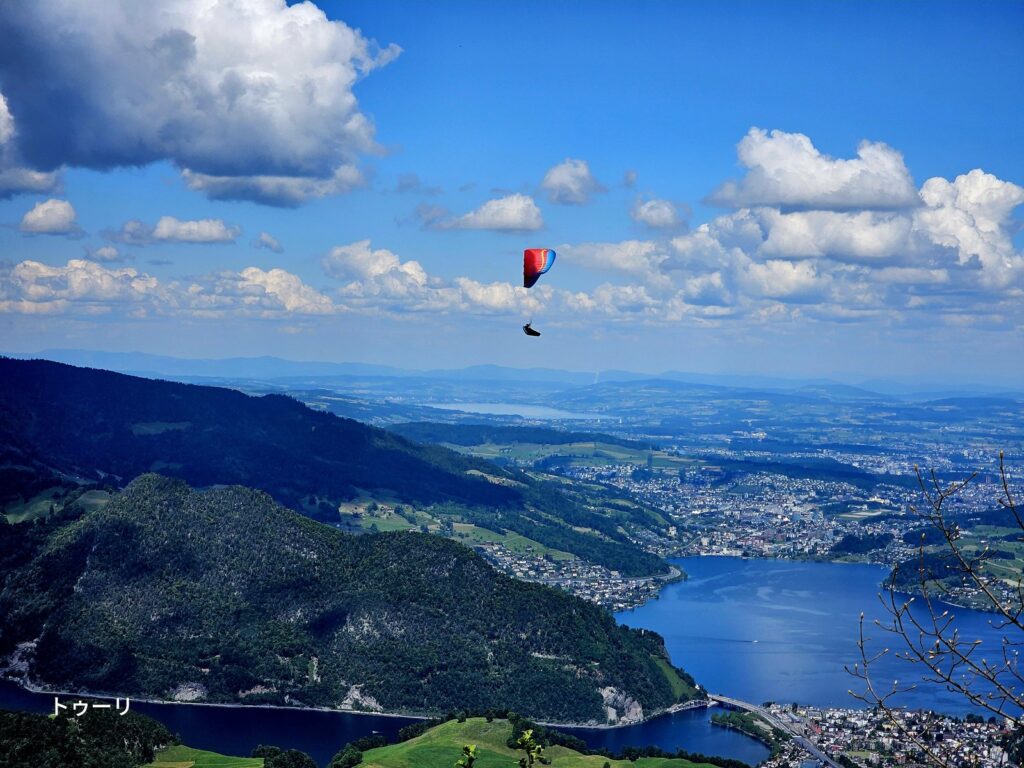
Here is the most important principle in this article: build your Switzerland itinerary around the number of bases, not the number of cities.
Changing hotels every day may look efficient on paper. In practice, it means repacking every morning, checking out, carrying suitcases through stations, climbing stairs, and finding somewhere to leave your bags before the next hotel will let you check in. You came for the scenery, but soon your attention is on luggage and timetables. Many disappointing Switzerland trips are really overpacked itineraries in disguise.
Switzerland is compact – about 41,000 square kilometers – and its rail network is excellent. Choose one or two bases and make day trips from them. The difference in how tired you feel after the same number of days is remarkable.
Both routes below follow that base-first approach.
The Classic 7-Day Switzerland Itinerary for First-Time Visitors
For a first visit, Turi recommends three nights in Interlaken followed by two nights in Zermatt. This gives you the Jungfrau Region and the Matterhorn – two of Switzerland’s defining landscapes – with only one hotel change. In Turi’s experience, it is the best-balanced introduction to the country.
For travelers flying from Japan or elsewhere in East Asia, this is commonly described as a five-night, seven-day trip because the final day is spent arriving home. If you are traveling from Europe or North America, think of it as a five-night, six-day stay in Switzerland.
Here is the route at a glance:
| Day | Base | Plan |
|---|---|---|
| Day 1 | Interlaken | Arrive at Zurich Airport, travel to Interlaken (about 2 hours), and take an easy walk |
| Day 2 | Interlaken | Full-day excursion to Jungfraujoch – Top of Europe |
| Day 3 | Interlaken | Grindelwald-First and the waterfalls of Lauterbrunnen Valley |
| Day 4 | Zermatt | Travel to Zermatt (about 2 hours 20 minutes) and explore the village |
| Day 5 | Zermatt | Gornergrat and panoramic Matterhorn views |
| Day 6 | – | Travel to Zurich Airport (about 3.5 hours) and fly home |
| Day 7 | – | Arrival home for travelers returning to East Asia |
Day 1: Do Not Push Too Hard on Arrival Day
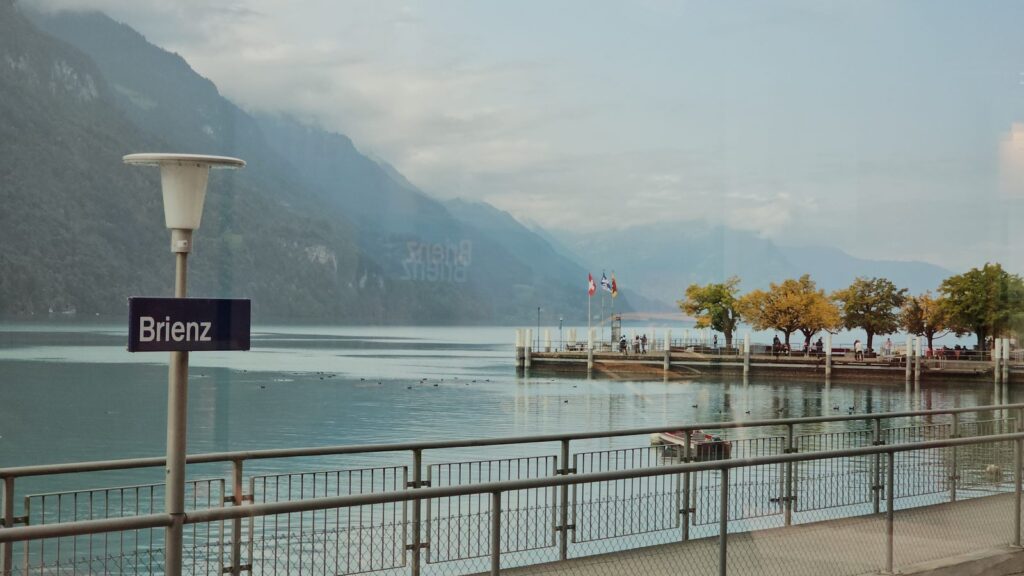
The train from Zurich Airport to Interlaken takes about two hours, depending on the connection. Turi recommends doing only that journey and taking a relaxed walk beside the lake or through town. If you overload the first day while jet-lagged, you may not have the energy to enjoy the mountain days that follow.
If your flight lands early, the awkward half-day before hotel check-in can be difficult to plan. Arriving Early or Flying Home Late? The Luggage Problem Many Switzerland Travelers Overlook explains the options in detail.
Day 2: Take an Early Train to Jungfraujoch
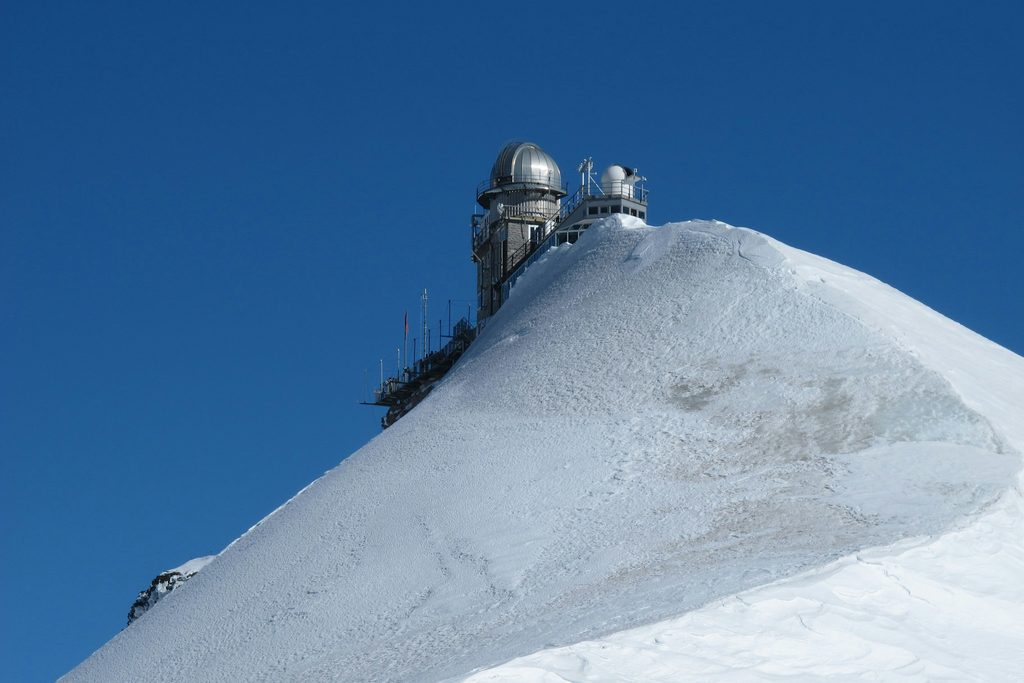
Jungfraujoch is home to Europe’s highest railway station at 3,454 meters. One classic route takes you on the Wengernalp Railway and then the Jungfrau Railway, which climbs through a tunnel inside the Eiger. At the top, the Sphinx terrace looks across the UNESCO-listed Aletsch Glacier, and the Ice Palace lets you walk through chambers carved into the glacier.
Turi gives guests two pieces of advice. First, allow six to seven hours for the return journey and the attractions at the summit. Do not try to force another major excursion into the same day. Second, take one of the earliest trains. The air is often clearer in the morning, and the busiest periods usually come later.
For travel from May 1 to October 31, 2026, a CHF 10 seat reservation is mandatory on the Jungfrau Railway. Ticket prices vary by starting point, route, date, and travel pass; published fares currently start from about CHF 129.60. Check the official Jungfrau website before booking.
At more than 3,400 meters, the air is noticeably thinner. Walk slowly, drink plenty of water, and do not be alarmed if you become short of breath more quickly than usual. If symptoms are severe or do not improve with rest, descend and seek assistance.
Day 3: First Cliff Walk and the Valley of 72 Waterfalls
In the morning, take the gondola from Grindelwald to First. The First Cliff Walk is a metal walkway fixed to the mountainside, combining a little adrenaline with wide views across the Bernese Alps.
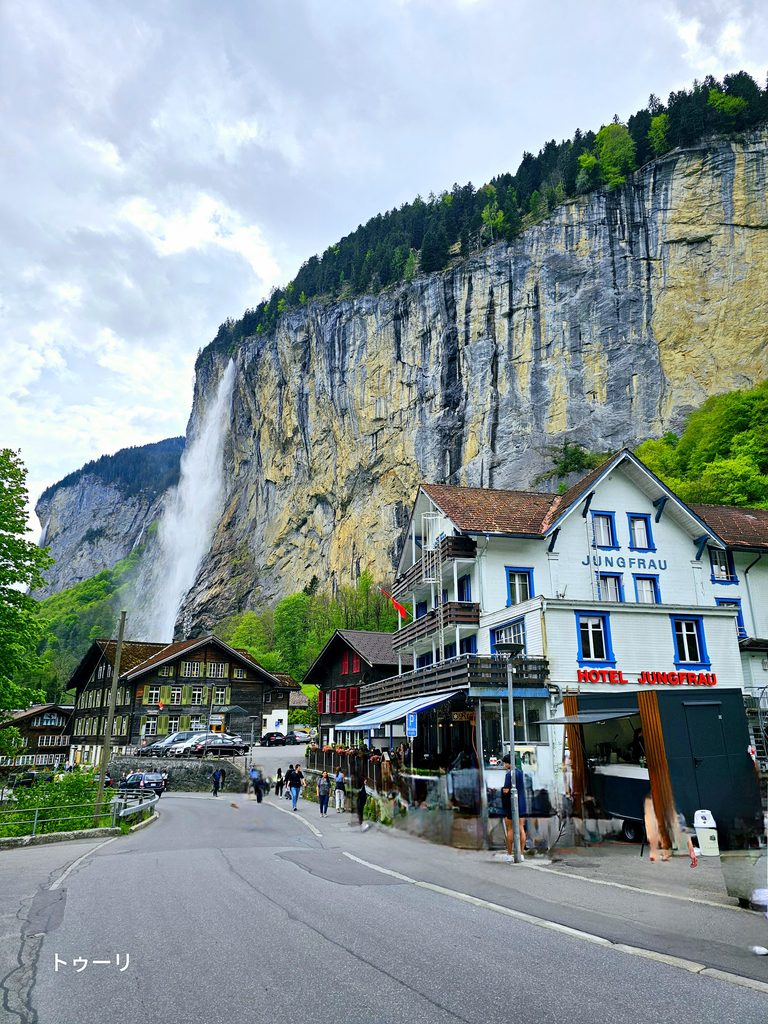
In the afternoon, continue to Lauterbrunnen. The village sits in a U-shaped valley enclosed by sheer rock walls and is known as the Valley of 72 Waterfalls. It is also often associated with Tolkien’s vision of Rivendell. Staubbach Falls drops almost 300 meters and can be seen from much of the village.
I also recommend Trümmelbach Falls. A tunnel lift carries visitors inside the mountain, where meltwater from the Eiger, Mönch, and Jungfrau thunders through a series of rock channels. At peak flow, as much as 20,000 liters of water per second can pass through the falls.
After leaving the falls, a short drive across green meadows leads to a quiet view that feels like the end of the world. Few visitors know it. It is one of Turi’s favorite surprises to share with guests on tour.
Day 4: Travel to Zermatt – the Transfer Is Part of the Experience
The train from Interlaken to Zermatt takes about two hours 20 minutes via Spiez and Visp, usually with one or two changes. Zermatt is car-free for conventional private vehicles, so drivers must park in Täsch and continue by shuttle train.
The rail journey is scenic in its own right. A private vehicle, however, makes it possible to stop along the way. Depending on the route and available time, you might pause at Spiez Castle above Lake Thun, the vivid blue waters of Blausee, or the mountain village of Kandersteg. Being able to turn a transfer into a sightseeing day is one of the real luxuries of private travel.
Spend the afternoon exploring Zermatt. Only small electric vehicles operate in the village, and the center combines traditional wooden buildings, long-established hotels, restaurants, and mountain shops. The Matterhorn appears between the buildings almost everywhere you turn.
Day 5: Face the Matterhorn from Gornergrat
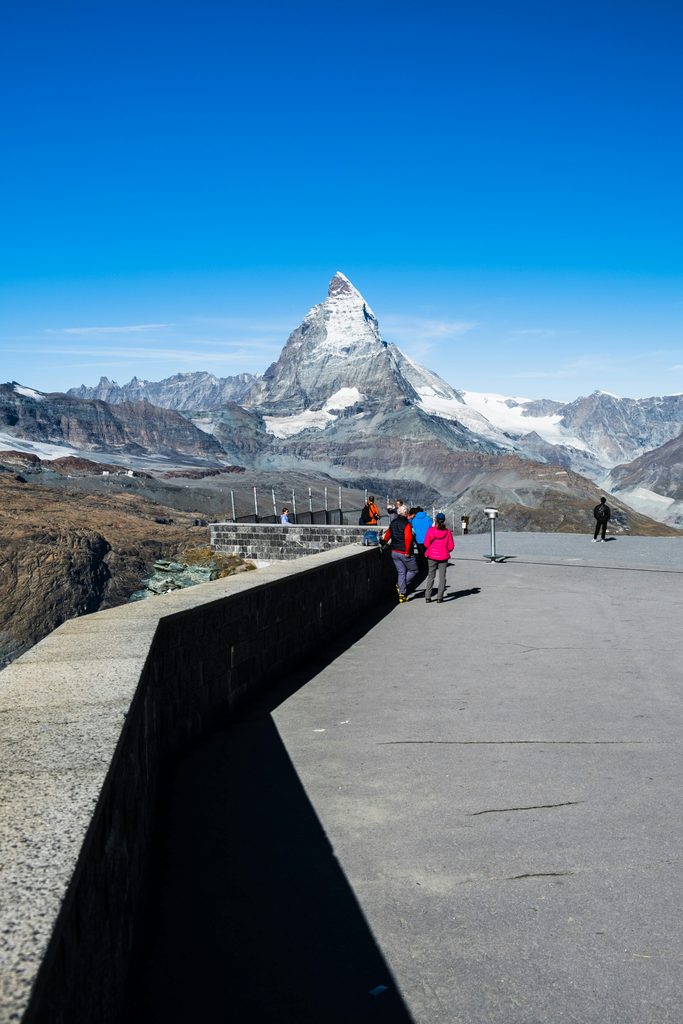
Take the cogwheel railway to the Gornergrat viewing area at 3,089 meters. The Matterhorn rises to 4,478 meters, surrounded by a panorama of other 4,000-meter peaks and glaciers.
For May through October 2026, the standard adult return fare from Zermatt to Gornergrat is CHF 132. Reduced fares, promotions, and special seasonal products may differ, so check the official Gornergrat price page for your exact date. A clear morning is usually the safest choice for views.
Days 6-7: Avoid Backtracking for Your Luggage

The journey from Zermatt to Zurich Airport takes about three and a half hours, so work backward from your flight time and leave a generous margin.
If you want to sightsee after check-out, it is easy to lose time returning to the hotel for your bags. Our guide to making the most of your first and last day in Switzerland explains how to avoid that double journey.
Travelling as a couple? Our Switzerland honeymoon guide shows where one different day in Ticino or Lake Como can fit into a 7-night trip.
A Focused 4-Day Switzerland Itinerary for a Short Stay
If you have only a few days in the country, choose one base: Lucerne. This route works well for a European weekend, a stopover, or a few extra days after a business trip. If you are flying from Japan, you will have barely two full sightseeing days, so it will feel fast. If possible, choose the longer itinerary above.
| Day | Plan |
|---|---|
| Day 1 | Arrive at Zurich Airport, travel to Lucerne (about 1 hour), and explore the Old Town |
| Day 2 | Mount Pilatus Golden Round Trip |
| Day 3 | Rhine Falls and Zurich |
| Day 4 | Departure |
Day 1: Lucerne Old Town
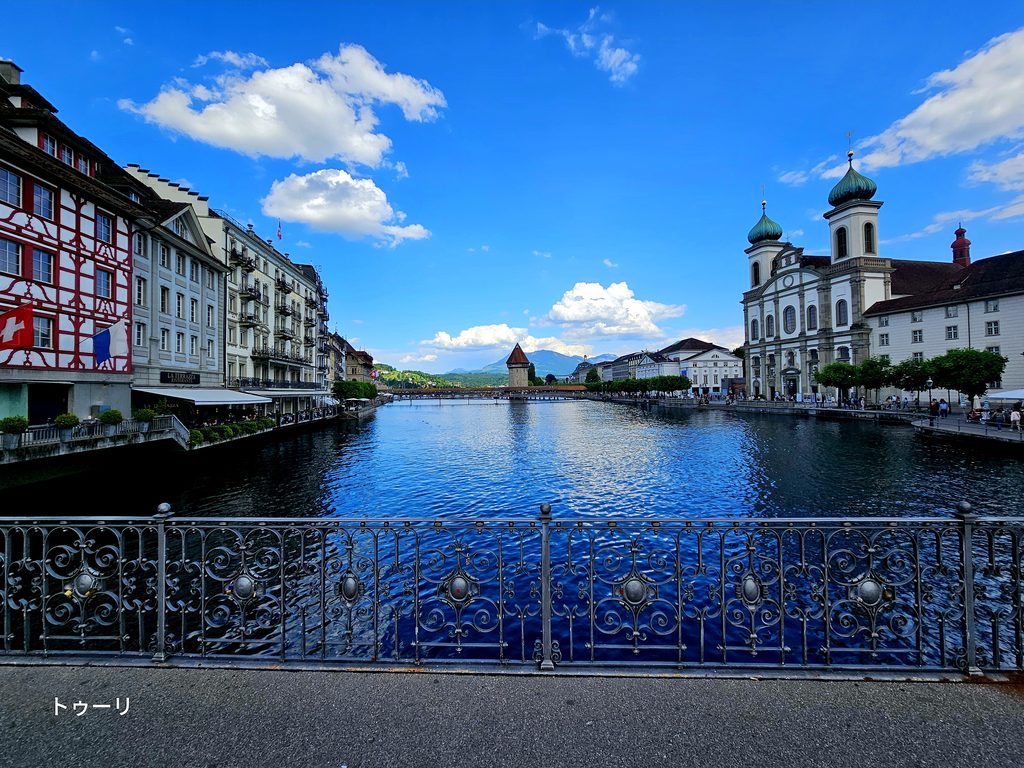
Lucerne is ideal for a short stay because its main sights are close together. The Chapel Bridge, built in the 14th century, is one of Europe’s oldest covered wooden bridges. Nearby, the Lion Monument was described by Mark Twain as one of the most moving pieces of stone in the world. The Musegg Wall adds a view across the city. You can see all three on foot.
Day 2: Make a Complete Circuit of Mount Pilatus
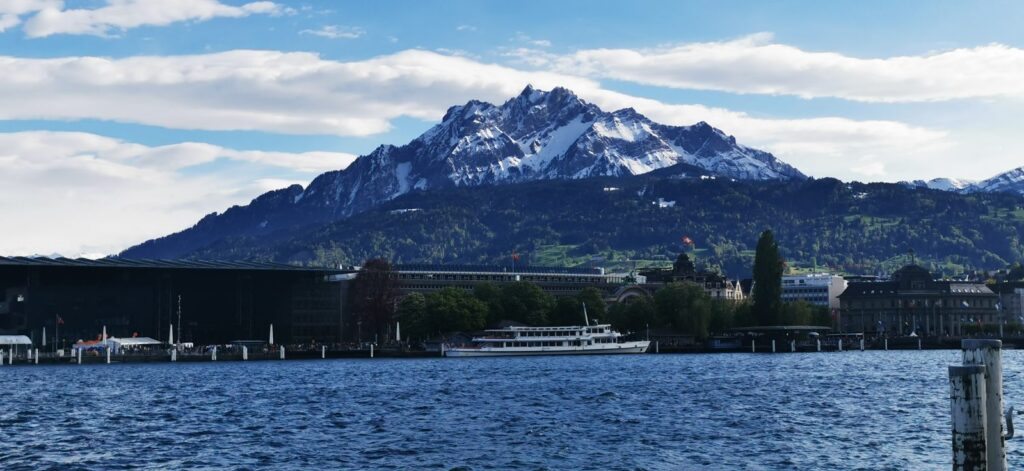
The appeal of Mount Pilatus is the Golden Round Trip, which uses a different route in each direction. From Kriens, panorama gondolas and the Dragon Ride aerial cableway take you to Pilatus Kulm at just over 2,100 meters. After the summit views, descend on the world’s steepest cogwheel railway to Alpnachstad and return across Lake Lucerne by boat.
The cogwheel railway is scheduled to operate from May 11 to November 29, 2026. The boat section of the full Golden Round Trip has a shorter season, so check the official Pilatus timetable for your travel date.
Day 3: Rhine Falls and Zurich
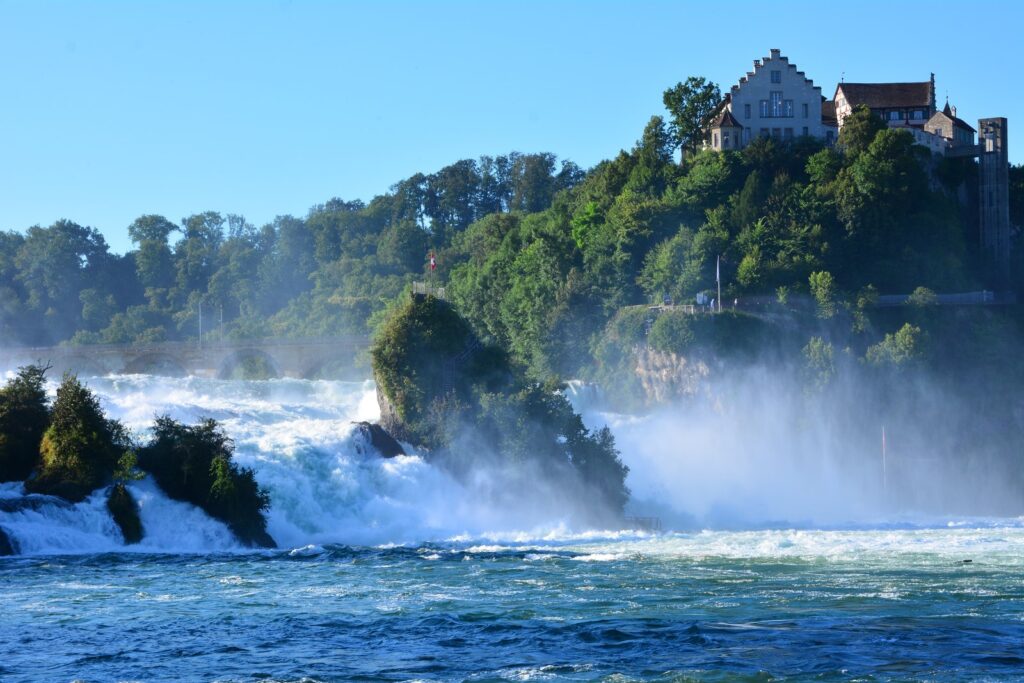
Start at Rhine Falls, Europe’s most powerful waterfall. When the seasonal boat service is operating, the yellow boat takes visitors to the rock in the center of the falls. Climbing the steps gives you a dramatic view of the water rushing past on both sides.
In the afternoon, return to Zurich and ride the red Polybahn funicular, which has operated since 1889, to the terrace near ETH Zurich. From there, you can look across the Limmat River and the Old Town toward the Alps. If time allows, finish with a relaxed cruise on Lake Zurich.
How Should You Travel? Swiss Travel Pass vs. Private Tour
The basic choice is simple: trains are excellent if you are comfortable navigating connections and carrying your luggage; a private vehicle with a local guide is especially useful if you want door-to-door travel, flexible stops, and help adapting the route.
Swiss Travel Pass Prices for 2026
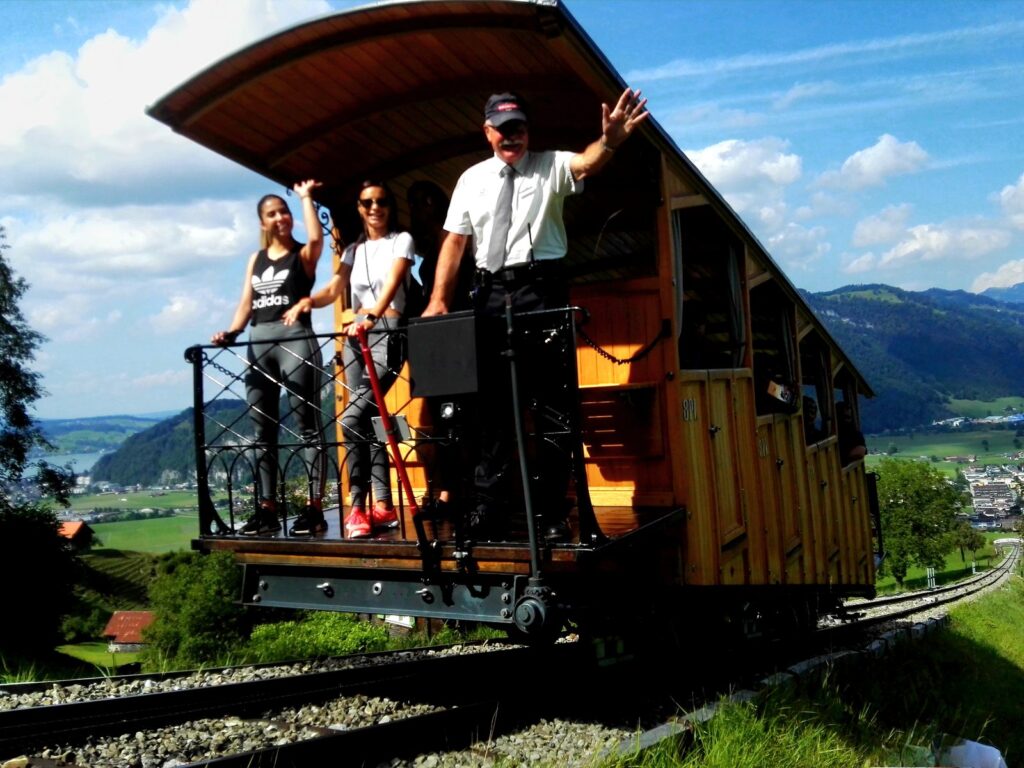
The Swiss Travel Pass covers trains, buses, and boats across much of the national network. These are the published adult second-class prices for 2026:
| Validity | CHF | Approx. USD |
|---|---|---|
| 3 days | CHF 254 | USD 282 |
| 4 days | CHF 309 | USD 343 |
| 6 days | CHF 399 | USD 443 |
| 8 days | CHF 439 | USD 487 |
For the five-night route, a 6-day pass is a useful starting point if you expect to use trains for most long-distance journeys. For the four-day route, do not assume that the 3-day pass is automatically the best value. Compare the pass with point-to-point tickets and the Swiss Half Fare Card based on the journeys you will actually take.
Mountain railways such as the Jungfrau Railway and Gornergrat Railway are not always fully included. Discounts vary by route and pass, so check the current validity map and each operator’s terms before buying.
The Private Vehicle and Local Guide Option

Our private tour costs CHF 750 per vehicle for a full 8-9-hour day – about USD 900 at the exchange rate as of October 2026. The flat rate is the same for one to six guests. For six people, that is about CHF 125, or USD 150, per person for the day.
The price includes the vehicle, your English-speaking driver-guide, hotel pick-up, unlimited mileage, and complimentary drinks and small snacks in the car. Attraction tickets, mountain railways, meals, and accommodation are separate unless agreed otherwise.
The first difference from rail travel is that your luggage moves with you. On a hotel-change day, your suitcases can stay in the vehicle while you stop at places such as Blausee or Spiez Castle. The second difference is that there is no minute-by-minute timetable. Turi deliberately avoids setting a rigid duration for every stop, because the goal is for guests to never feel rushed. Within the day’s 8-9 hours, you can decide where you want to stay longer and which less important stop to shorten.
A private vehicle also makes it easier to react to the weather. If Lucerne is rainy but conditions are clearer toward Rhine Falls, we can reconsider the day’s direction. The route is a framework, not a fixed script.
Guests who book five days or more are invited to a farewell dinner at our expense. A short video made from your trip photos and drone footage is also included as a keepsake.
Japanese-language planning support is available before the trip. You are welcome to say, for example, ‘I would like to use the 7-day itinerary as a starting point, but adapt it for my family.’ Contact us to discuss the dates and route.
How This Switzerland Itinerary Changes by Season
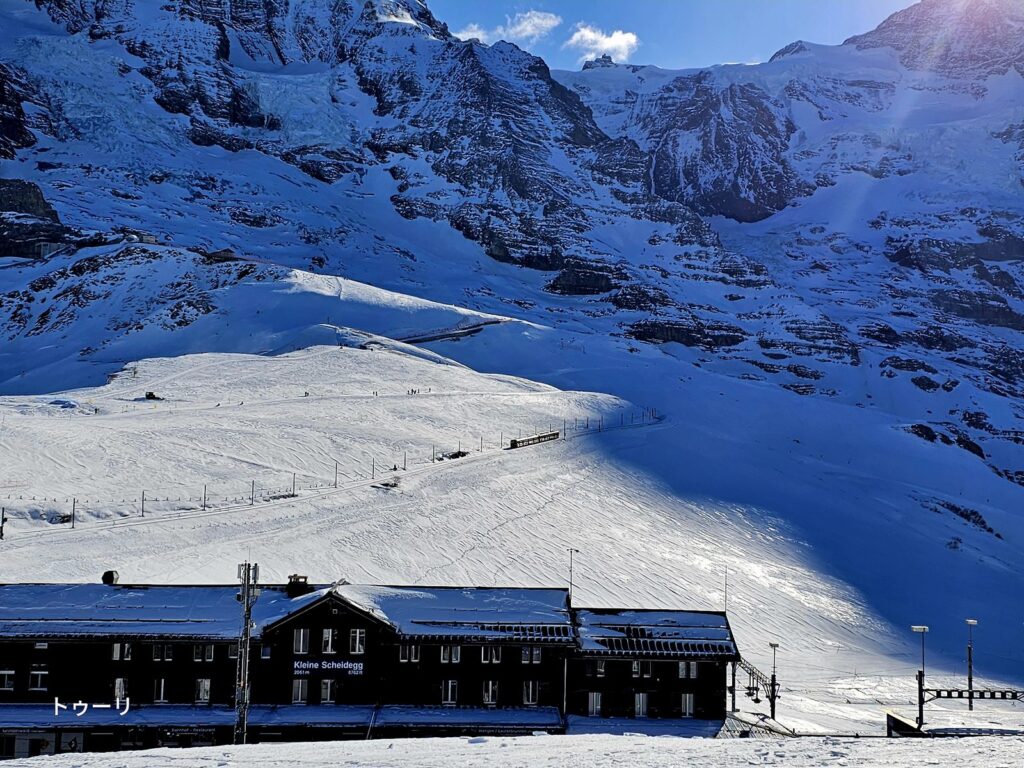
The routes in this article work most easily from June through mid-October. At other times of year, you will need to adjust them:
- Late autumn (late October-November): Maintenance closures are common on mountain railways and cable cars, as each operator carries out annual inspections during this window. Once you have chosen your destinations, always confirm current operating status on the official sites before you go: Jungfrau Region / Gornergrat Railway / Zermatt ropeways / Pilatus.
- Winter (December-March): This is the season for snow scenery and skiing. Jungfraujoch and Gornergrat remain accessible year-round, but standard summer hiking routes are generally unavailable.
- Spring (April-May): Lower valleys may be full of flowers while the high mountains still have snow. It is beautiful, but maintenance closures are again common, so check operating schedules carefully.
For month-by-month conditions and the main 2026 closure dates, read Best Time to Visit Switzerland (2026): A Local’s Month-by-Month Guide.
The base-first approach is particularly valuable for families with children and travelers with older relatives. Reducing hotel changes makes a visible difference to everyone’s energy.
Estimated Cost of This Switzerland Itinerary
For the five-night route, a realistic on-the-ground budget is roughly CHF 1,400-2,000 per person, excluding international flights and any private-tour days. For two people sharing a room, the broad breakdown is:
| Category | Estimated CHF | Approx. USD |
|---|---|---|
| 5 nights’ accommodation | CHF 500-750 | USD 555-833 |
| Meals for 6 days | CHF 360-600 | USD 400-666 |
| 6-day Swiss Travel Pass | CHF 399 | USD 443 |
| Mountain transport and admission | CHF 150-250 | USD 167-278 |
For a three-night, four-day stay, allow approximately CHF 750-1,250 per person, or about USD 830-1,390, excluding flights and private-tour days. Actual costs depend heavily on hotel location, room type, dining choices, and mountain excursions.
For a fuller breakdown and practical ways to get more value from your budget, read How Much Does a Switzerland Trip Actually Cost? A Local Guide Breaks It Down.
Frequently Asked Questions
How many days do you need in Switzerland?
Four full sightseeing days – usually a five-night trip – are the shortest comfortable option if you want both the Jungfrau Region and Zermatt. A three-night, four-day trip can still work, but you should choose one base and explore the surrounding area. With a week or more on the ground, you can add the Glacier Express or Ticino, Switzerland’s Italian-speaking region.
If I choose only one, should I visit the Jungfrau Region or Zermatt?
Choose the Jungfrau Region if you want a wider range of experiences: high viewpoints, waterfalls, valleys, villages, and hiking. Choose Zermatt if seeing the Matterhorn is the central purpose of your trip. For a first visit, Turi usually gives the Jungfrau Region more time because it offers better alternatives when the weather changes. On a clear day you can go to Jungfraujoch; in poorer weather, you can shift to waterfalls, valleys, or lower-altitude stops.
Can families with children and senior travelers follow this itinerary?
Yes. Nearly all the main viewpoints in this itinerary can be reached by gondola, cableway, funicular, or mountain railway, so strong hiking ability is not required. The key is to choose one major destination per day and minimize hotel changes. If lifting luggage and navigating transfers will be difficult, moving door to door by private vehicle can make the trip much easier.
What should I do if it rains?
Swiss weather changes quickly, so always keep a lower-altitude or weather-resistant alternative. Rhine Falls, St. Beatus Caves, and Trümmelbach Falls are often more workable than exposed high-mountain viewpoints, although access and boat services can still be affected by conditions.
The month-by-month guide to the best time to visit Switzerland includes more detail on weather and seasonal planning.
Turn This Sample Route into Your Own Switzerland Itinerary
A model itinerary is only a framework. Your actual trip will depend on your dates, energy level, interests, and the scenery you most want to see. Start with the seven-day route above, then adjust it: add another night in Zermatt, slow the pace for children, or replace a mountain excursion with a city or lake day.
You do not need to have every date fixed before getting in touch. Tell us what you are considering, and Turi will help you shape a realistic route based on 15 years of experience in Switzerland.
To see what a day with Turi looks like, what is included and the 750 CHF daily rate, visit our private tours in Switzerland page.
Start planning: https://www.swissprivatetour.ch/en/contact/
Related Articles
- Best Time to Visit Switzerland (2026): A Local’s Month-by-Month Guide
- How Much Does a Switzerland Trip Actually Cost? A Local Guide Breaks It Down
- 5 Reasons People Say Switzerland Travel Is Boring – and How to Avoid All of Them
- Arriving Early or Flying Home Late? The Luggage Problem Many Switzerland Travelers Overlook
Prices and operating schedules in this article are estimates checked in September 2026. USD conversions use approximately CHF 1 = USD 1.11 for consistency with our existing English articles. Exchange rates and transport schedules change, so confirm the latest information with each official operator before traveling.